You pick up a jar of amla murabba. It looks great. The fruit is shiny, the syrup is golden, the label is nice. You take it home, open it, and it's just okay. Maybe the amla is mushy. Maybe it's way too sweet. It happens a lot. The good news is that you can avoid it. Once you know what to look for, finding the best amla honey murabba gets much easier, and you can check most things before you even open the lid.
What Makes the Best Amla Honey Murabba?
Let's start with the basics. Murabba is an Indian way of preserving fruit. For amla, the berries are pricked with a fork so they soak up the sweet liquid. Then they're cooked gently and left to rest until they turn soft. Most murabba is made in sugar syrup. The honey version uses honey instead.
That one change matters a lot. Honey is the main ingredient here, so there's nowhere for a poor one to hide. The best amla honey murabba has three things going for it: firm fruit, good honey, and a maker who took their time. If one of them is missing, you'll notice.
Here's a simple way to check a jar. Just go step by step.
Why Honey Instead of Sugar?
Fair question. Sugar syrup is cheaper and easier to work with, so most murabba is made that way. Honey costs more, but it gives a deeper, softer sweetness that goes really well with the sour taste of amla. Many people also like that honey feels more natural. That's why the best amla honey murabba is worth a little extra. You're paying for better ingredients, not just a fancier label.
Start With the Back of the Jar
Most of us look at the front first. Try the back instead.
Read the ingredients. A good jar has a short list, like amla, honey, and maybe a little spice. That's it. If you see sugar, glucose syrup, colour or "flavour," be careful. You might be paying for honey murabba and getting sugar murabba.
Next, look for a batch number, a manufacturing date, a best-before date and an FSSAI licence number. If these are missing, it's a bad sign. A brand that cares about its product shows these clearly.
Tilt the Jar
Hold the jar up and tilt it slowly. Good honey moves slowly and coats the glass evenly. If it looks thin, watery or full of bubbles, something may be wrong. It could be diluted, or it may have started to ferment.
But here's the thing. Thick honey doesn't always mean pure honey. Some processed honey is thick too. So use this check as a small hint, not as proof. Real proof comes from lab tests, and we'll get to that soon.
Look at the Amla
Now check the fruit. Good amla pieces have clear edges and look firm. If you lifted one with a spoon, it wouldn't fall apart. Mushy or torn pieces usually mean the fruit was cooked too long.
The colour matters too. Amla in honey should look golden, amber or light brown. If it looks bright green or bright red, something extra has been added.
Size is another clue. Whole or big pieces mean the maker probably started with good fruit. A jar full of tiny broken bits? Skip it.
Find Out What Kind of Honey It Is
This is the big one. When you're looking for the best amla honey murabba, always ask what kind of honey is inside.
The word "honey" on a label can mean many things. It can be raw and unheated. It can be heavily processed. Sometimes it's even mixed with sugar syrup. Since honey makes up most of the jar, its quality changes the taste more than anything else.
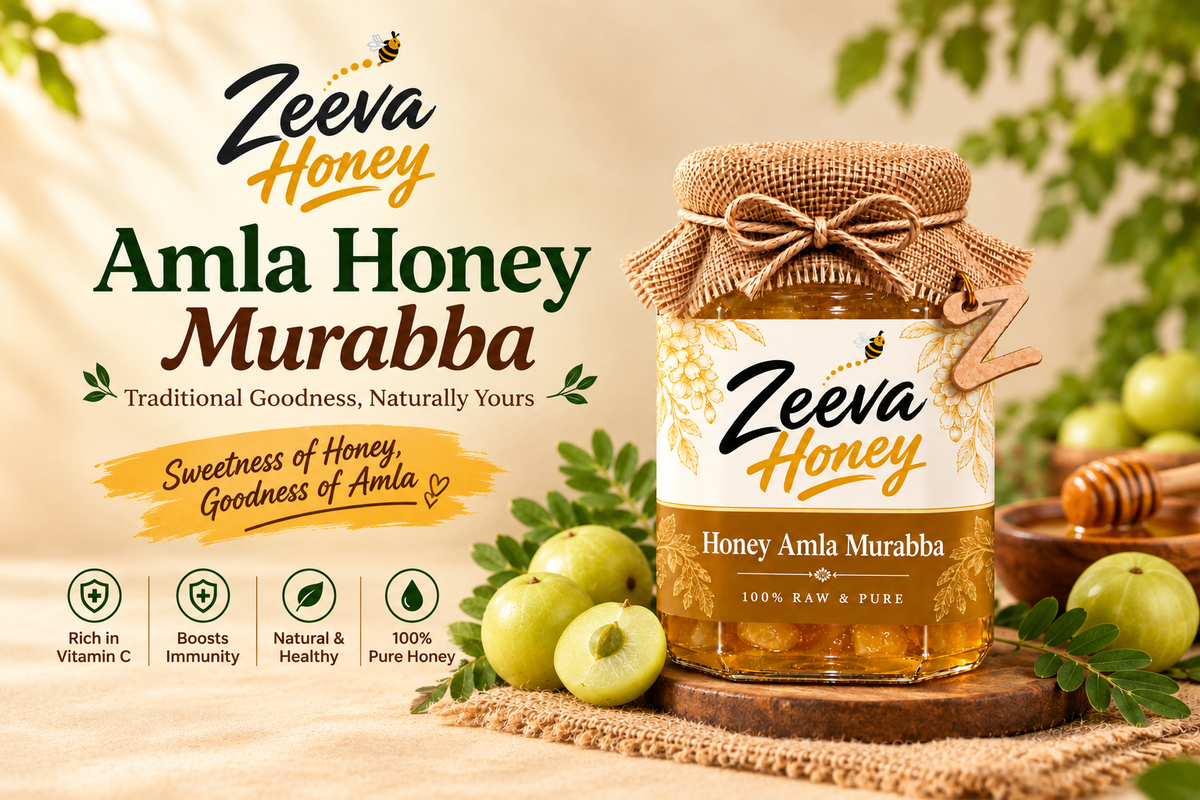
So look for brands that say their honey is raw and unheated, and that back it up with lab testing. NMR testing is one of the better ways to catch fake or mixed honey, so a brand that mentions it is at least being open with you. Zeeva Honey, for example, says its honey is raw, lab-tested and NMR-tested, with no added sugar or syrup.
Smell It First, Then Taste It
When you open the jar, smell it before anything else. You should get honey first, and then a light, tangy amla smell. If it smells sharp, sour or like something fermenting, don't eat it.
Then try one piece slowly. A well-made murabba tastes like this:
-
Sweet first. It's warm and smooth, not sharp or sticky.
-
Then tangy. That fresh sour bite tells you it's real amla.
-
A dry finish. Amla leaves a slightly dry, rough feeling in your mouth. That's normal.
If it only tastes sweet, the amla was probably watered down or over-sweetened. If it tastes bitter, the fruit may not have been prepared well.
The 30-Second Checklist
Shopping online, or standing in a shop with people waiting behind you? Run through this quickly:
-
Ingredients: amla and honey, and little else
-
Dates: batch number and best-before date are printed
-
Honey: raw and unheated, with testing mentioned
-
Fruit: whole pieces with a natural golden-brown colour
-
Price: similar to other honest, raw honey products
If a jar passes all five, it could well be the best amla honey murabba on the shelf. If it fails two or more, leave it.
Three Mistakes People Make
Even careful buyers slip up sometimes.
Buying by colour alone. A pretty jar can still taste bad. Look at everything, not just how it looks.
Thinking crystals mean fake honey. Raw honey turns grainy over time. That's natural. Put the jar in a bowl of warm water for a few minutes and it softens again. Just don't use very hot water, because too much heat can change the honey.
Buying the cheapest one. Good amla costs money. Real honey costs even more. If one jar is much cheaper than the rest, ask yourself where the savings came from. Most of the time, it's the honey.
How to Enjoy It
Once you've found the best amla honey murabba, don't let it sit in the cupboard. Here are a few easy ways to eat it:
-
Have one piece in the morning with a spoon of the honey
-
Chop a piece and add it to yoghurt or oats
-
Eat it with a simple paratha at breakfast
-
Keep one piece for after lunch when you want something sweet
It's naturally sweet, so keep portions small. If you have diabetes or any other health issue, talk to your doctor first. Store the jar in a cool, dry place, close the lid tightly every time, and always use a clean, dry spoon. Even one drop of water can spoil it.
Ready to Try Amla Honey Murabba From Zeeva Honey?
Want to see what a carefully sourced option looks like? Take a look at Zeeva Honey's Honey Murrabba collection. Zeeva makes raw, unheated honey that's lab-tested and ethically sourced, with no added sugar or syrup. Looking for the best amla honey murabba to buy this season? Skip the guesswork. Start there, compare what you find with the checks above, and see the difference for yourself.
Shop the Honey Murrabba Collection →
Frequently Asked Questions
How can I tell if amla honey murabba is genuine?
Read the label first. A genuine one lists mostly amla and honey, with no added sugar or artificial colour. Look for a batch number, dates and any mention of lab testing. Then use your senses. The fruit should be firm, the honey should be glossy, and the smell should be honey with a light tang.
How much amla honey murabba should I eat in a day?
Most people have one piece with a little honey. It's a sweet food, so small portions are best. If you have a health condition, ask your doctor what's right for you.
Is amla honey murabba healthier than the sugar version?
It skips the sugar syrup and tastes richer, but it's still sweet. Enjoy it in small amounts. Don't think of it as a cure for anything.
How long does it stay good after opening?
Follow the best-before date on the label. After you open it, keep the lid tight, store it in a cool, dry place away from sunlight, and never use a wet spoon.
Can kids eat amla honey murabba?
Older children can have small amounts. But honey isn't safe for babies under 12 months, so keep it away from infants.